Emotions, Timing, and the Awareness Timeline
Today’s ProsoPlate update brings three interconnected features that deepen how you can observe your eating patterns. Each one emerged from research and from my own experience using the app daily.
18 Emotions, Zero Shame
Most eating trackers focus on food. ProsoPlate focuses on what’s happening inside you - and that means tracking emotions.
But emotion tracking done poorly can reinforce negative patterns. Done well, it builds what researchers call emotional granularity - the ability to distinguish “lonely” from “bored” from “tired.” Lisa Feldman Barrett’s research shows that people who make these fine-grained distinctions have about 30% more flexibility in emotion regulation.
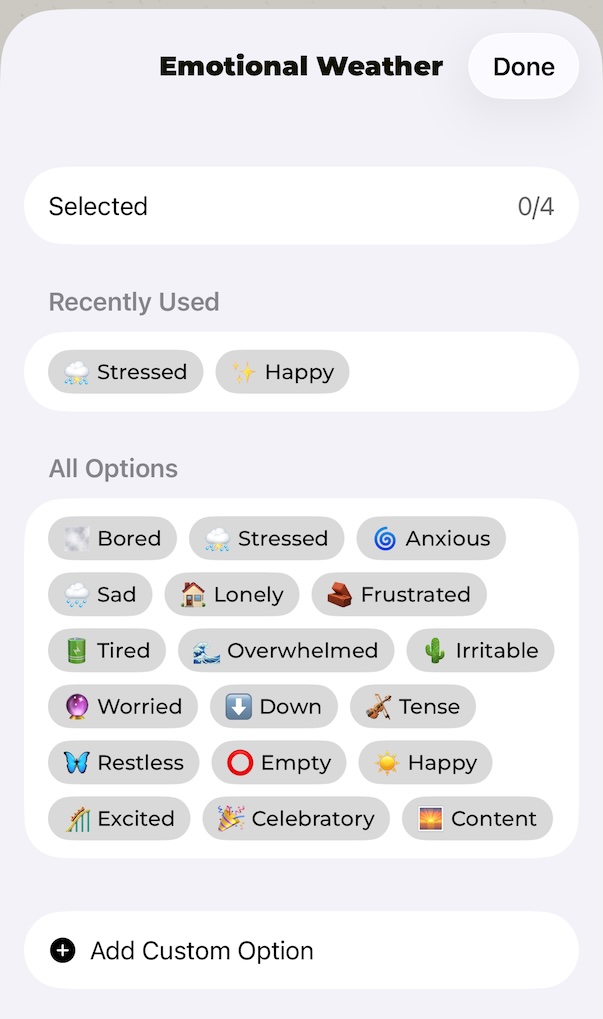
We landed on 18 emotions organized into three groups:
Core triggers (8 emotions): Bored, Stressed, Anxious, Sad, Lonely, Frustrated, Tired, Overwhelmed - these have the strongest research evidence as eating triggers.
Secondary triggers (6 emotions): Irritable, Worried, Down, Tense, Restless, Empty - moderate evidence, often variants of the core triggers.
Positive emotions (4 emotions): Happy, Excited, Celebratory, Content - because research shows positive emotions increase food intake more often than negative emotions decrease it. Most apps ignore this entirely.
What we deliberately left out: Shame never appears in ProsoPlate. The research is clear - shame creates spirals that reinforce problematic eating patterns. Guilt (“I did something I regret”) can motivate change. Shame (“I am bad”) links to pathology. This is a firm design boundary.
I’ll be honest - I’m still experimenting with whether to group emotions or leave them flat as they are now. How best to present them in the Evening Review remains an open question. But the app records everything, so don’t skip logging this data. I guarantee it will help reveal patterns in the near future.
Seeing the Spaces Between Meals
When we think about mindful eating, we focus on the meal itself. But what about the gaps?
This update introduces meal timing awareness:
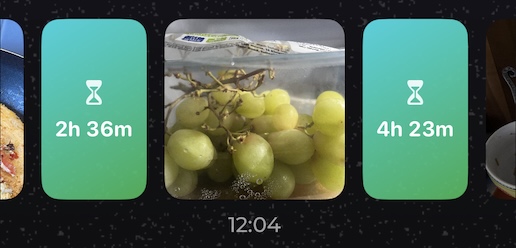
- Hourglass tiles show the time between meals - whether it’s “2h 15m” or “45m”. No judgment, no targets, just information.
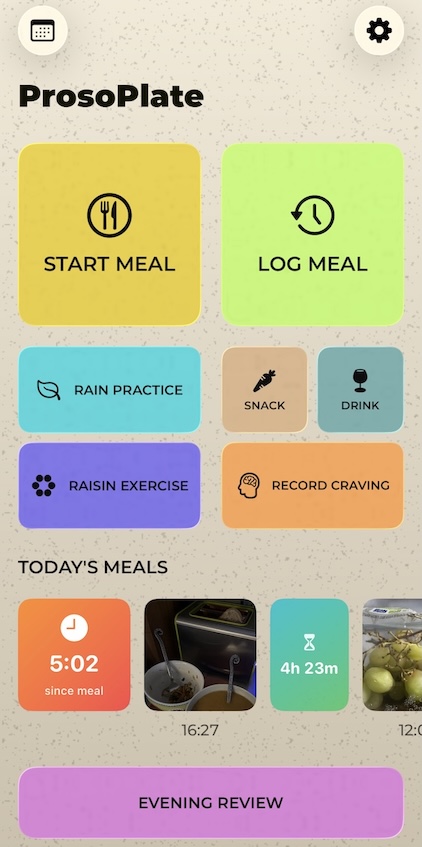
- Time Since Last Meal appears on your home screen, answering a surprisingly hard question: “When did I last eat?”
- Yesterday’s reminder - notes from your Evening Review appear the next morning on your home screen.
Many users are discovering patterns they never noticed: 7-hour gaps between lunch and dinner, dramatically different spacing on weekends versus weekdays, or frequent snacking when working from home. These insights can be more actionable than any calorie count.
The Mindful Awareness Timeline
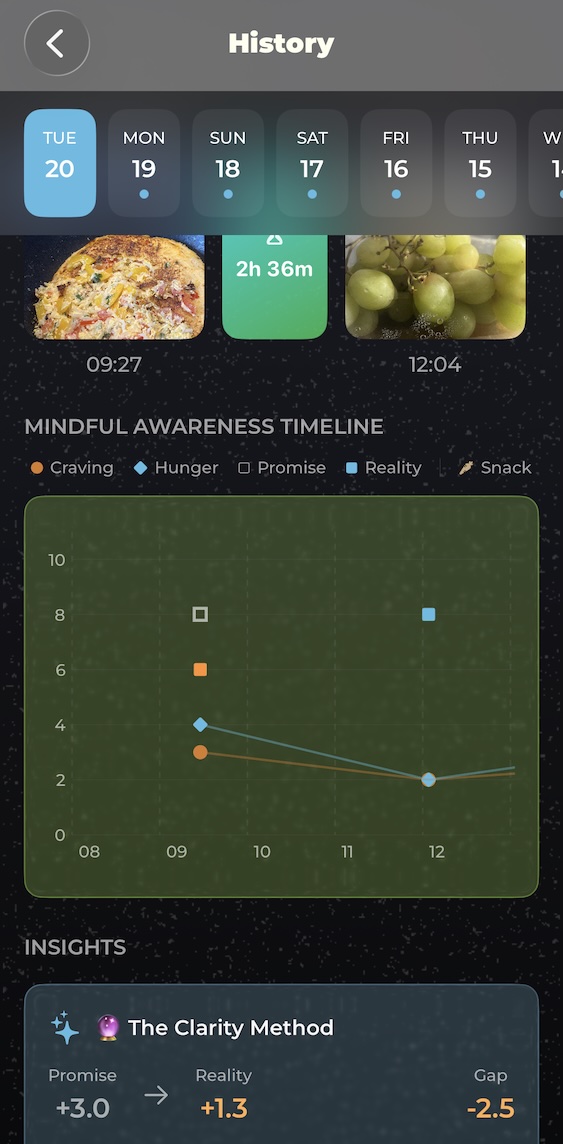
This feature appears in both Evening Review and History: a multi-dimensional visualization of your eating day.
The Timeline shows six data series:
| Symbol | What It Shows |
|---|---|
| Orange circle | Craving intensity before eating |
| Teal diamond | Hunger level before eating |
| Empty square | The Promise - what your mind said you’d get |
| Filled square | The Reality - what you actually experienced |
| Carrot icon | Snack logged |
| Wine glass | Alcohol logged |
This is the part of the app where I have high hopes and am still experimenting. More changes coming soon.
The Curiosity Principle
Throughout these features, we follow what I call the curiosity principle: the app helps you notice patterns with interest, not track compliance with goals.
- No streaks
- No targets or ideal distributions
- No comparison to other users
- No red flags or color-coded judgment
The assumption: awareness precedes change. When people see their patterns clearly, they make their own adjustments. ProsoPlate makes patterns visible. What you do with that visibility is yours.
Try It Today
All three features are available now - no settings to configure. Just use ProsoPlate as you normally would and notice what emerges.
Record a few meals with the full flow, log some snacks, then open your Evening Review and explore the Timeline. Tap the legend items. See what happens when you focus on just craving, or just the Promise/Reality gap.
The pattern might surprise you.
ProsoPlate is available on the App Store. Built on the Clarity Method - tracking experiences, not calories.