
ProsoEcho is the most experimental of the tools, and the one closest to the oldest part of the practice. Before the printing press, before the notebook, philosophy was something you carried in your body - the Stoics and the early Buddhist traditions learned their core texts by heart, so that the right words were available in the moment they were needed, not filed away on a shelf for later.
ProsoEcho is a small tool for doing exactly that, today.
How it works
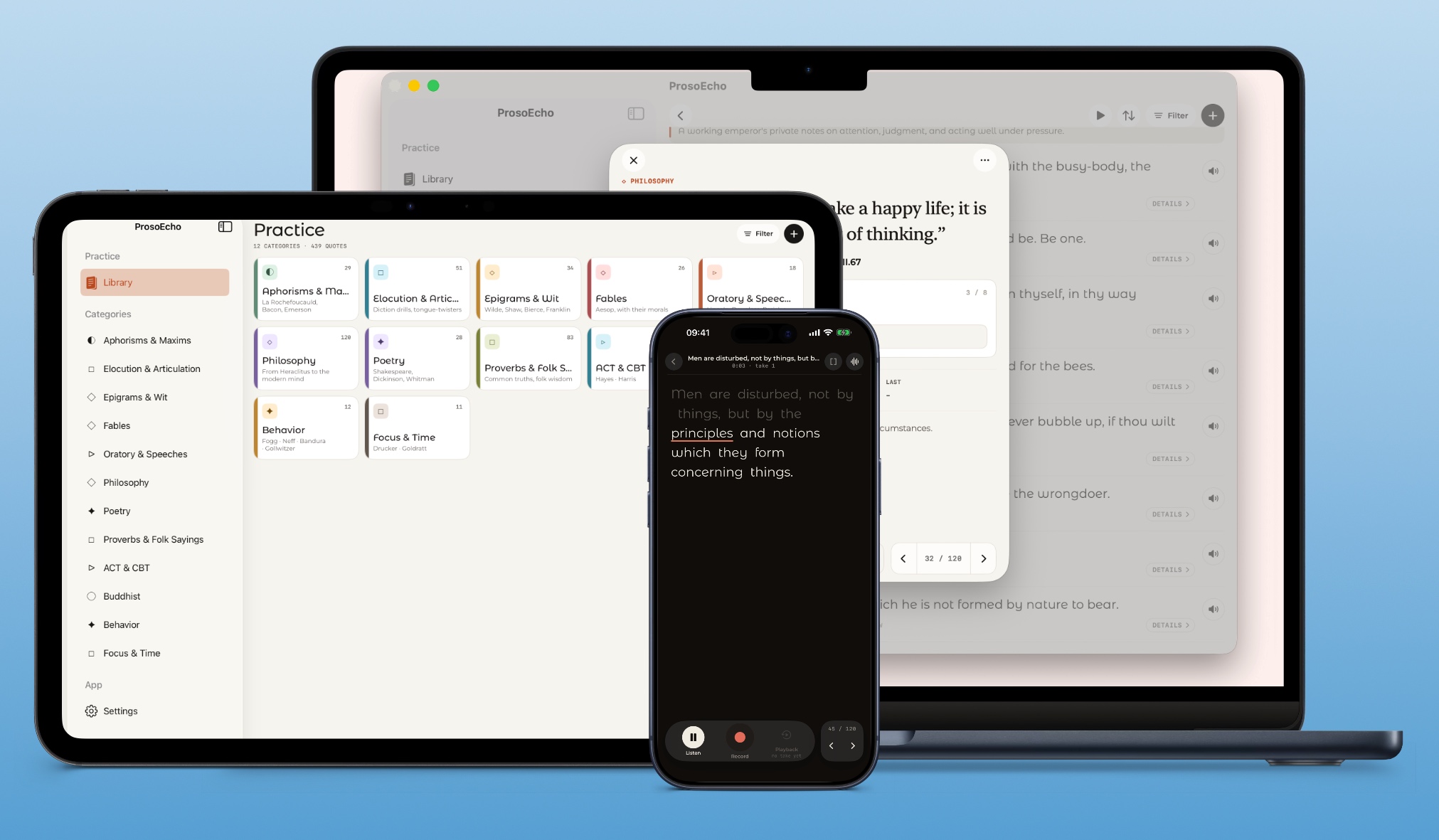
- Collect the text that matters to you - quotes, sentences, passages, snippets. Type it, paste it, or send it straight in from any app with the share sheet. The lines you want to actually live with, not just bookmark.
- Listen first. Text-to-speech reads a passage back to you - a built-in voice, or your own Apple Personal Voice if you have set one up - so you can hear the shape and rhythm of it, and check your pronunciation against it, before you ever open your mouth.
- Say it aloud. Speak the passage yourself, out loud, and record your voice as you go.
- Echo it back. Play your own recording, compare it against the spoken model, and repeat - until the words are yours.
Why aloud, and why by heart
Writing something down can be a way of not remembering it - the page holds it so you don’t have to. Saying it aloud, repeatedly, until it’s memorised, is the older discipline: the words become part of how you think, ready when a difficult moment actually arrives. Speaking also engages attention in a way silent reading does not - you cannot mumble a passage absent-mindedly and still get it right.
ProsoEcho turns that ancient practice of memorisation - learning by heart rather than filing away - into a few quiet minutes with your own voice.
Where this is now
ProsoEcho is on the App Store for iPhone, iPad and Mac, and it is the youngest of the tools - still finding its shape, so expect it to keep changing. If the idea lands with you, or you think I’ve got it wrong, write to me at hi-echo [at] prosoche [dot] co . I read everything.